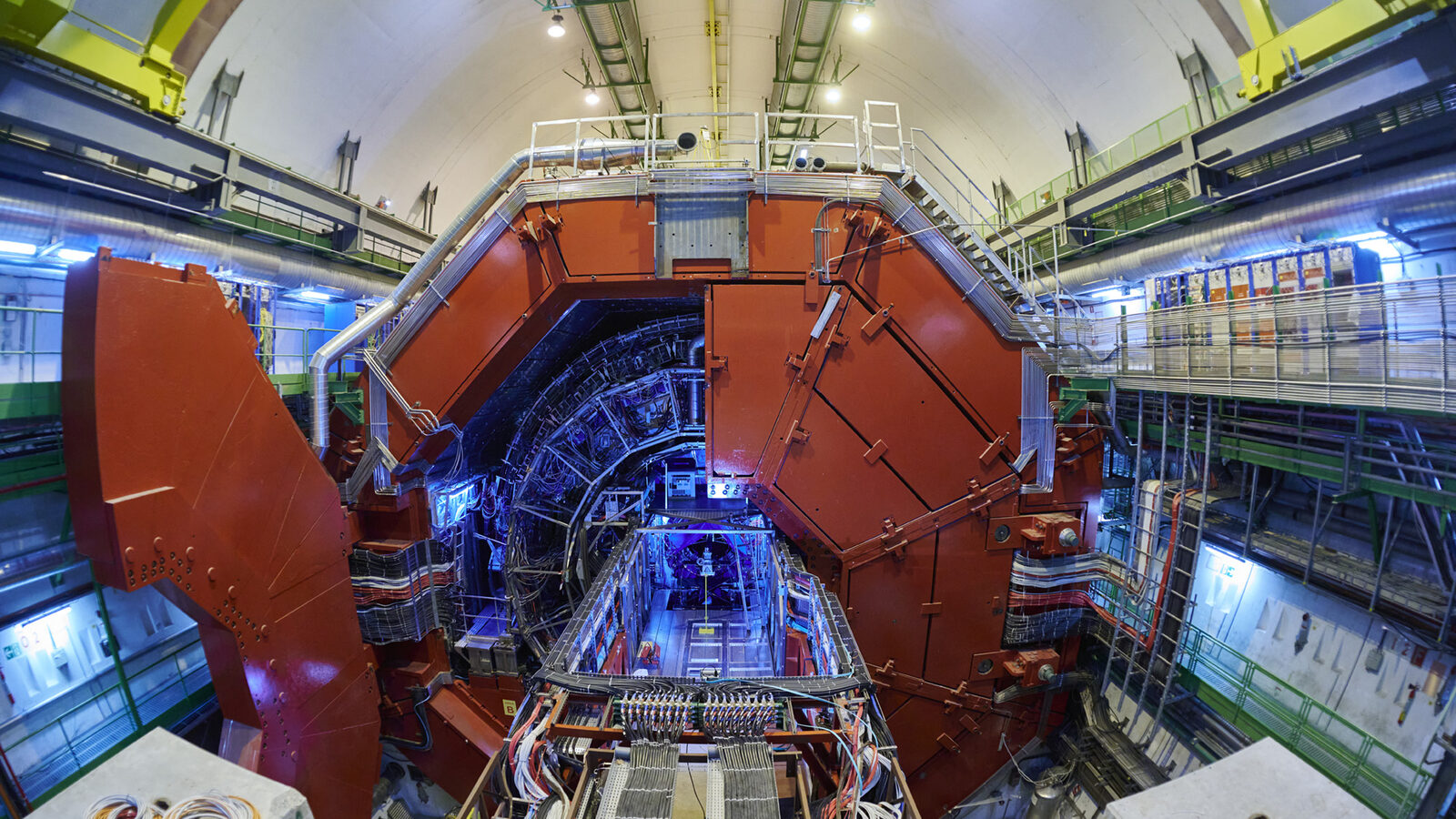
In 2023, the ALICE experiment was ready for their best year yet, until a mysterious signal threatened everything. As the LHC wraps up its 2025 lead-ion run, physicists recall how they worked together to solve the puzzle.
Mario Calvetti of the University of Florence has been named the new director of Frascati National Laboratories by Italy's Istituto Nazionale di Fisica Nucleare (INFN), marking a return to the origins of his scientific career.
From babies in strollers to their grandparents, about 2000 people of all ages enjoyed science at the Fermilab Family Open House on Sunday, February 13.
Physicists and scientists of other disciplines around the world have created countless research sites that remind me of the colossal dimensions of ancient temples, in one way; and, in another, of fragile, beautiful little altars where they orchestrate experiments, with research objects largely in
Working at Stanford Linear Accelerator Center, you never know what projects may come your way. So when Helen Quinn, head of education outreach at SLAC, asked me to plant trees with a class of fourth graders, I said sure, it's not rocket science.
Before the days of the World Wide Web, scientists would mail their colleagues preprints, hard copies of papers submitted to scientific journals. In 1991, particle physicists began posting these papers on the Web, calling them e-prints.